Title feel a bit dramatic? I promise it isn’t. This is absolutely an attack on the idyllic suburban image we’ve been sold for decades. Safe streets, good schools, quiet neighborhoods, and “a better place to raise kids.” On paper, it sounds like the ideal environment for children to grow, explore, and thrive. For children, it very may well be the dream. For teenagers, it can be a completely different story.
A story that is a lot quieter, a lot lonelier, and a lot more limiting than we are comfortable to admit.
The Illusion of Safety Over Real Freedom
Suburbs are build around control- controlled environments, controlled risk, and controlled access. Everything is spread out, curated, and designed for predictability and security.
But teens do not thrive in controlled environments. With a boost of brain development, teens not only desire friction, but they create it unintentionally. They desire independence and places to go that aren’t constantly monitored or monetized.
In the suburbs:
- You can’t get anywhere without a car
- Public spaces are limited or policed
- Hanging out becomes “loitering” the second it appears unstructured.
So what happens? Teens stay inside. Or they get labeled as a problem for simply existing in public spaces.
We traded real-world exploration for the illusion of safety – and teens are paying the price.
Isolation Disguised as Comfort
Suburban life is physical spread out, and that distance creates emotional dissonance.
It becomes harder to walk to your friend’s house on a whim. No running into people organically. No sense of shared, spontaneous culture.
Everything has to be:
- Planned
- Scheduled
- Driven to
That may work for adults and young children, but for teens it creates a low-grade and constant isolation.
When making connections becomes inconvenient, it slowly stops happening. Alternately, we see teens making connections – albeit not always healthy ones, through social media.
There’s Nowhere to Just Be
One of the biggest unspoken problems? Suburbs don’t give teens anywhere to exist without spending money or being supervised.
Think about it:
- Malls are dying, heavily monitored, and far away
- Parks often feel designed for little kids, not teens. Many banning skateboards, electric bikes/scooters
- Coffee shops expect you to buy something in order to stay
There’s no equivalent of a teen “third space” – that crucial space outside of home and school where identity and community actually form.
Without the coveted third space, teens bounce between two worlds. Isolation (home) and stress (school).
That’s not a life. Thats a loop.
Creativity Gets Squeezed Out
My mother always used to tell me “only boring people get bored”. My boredom as a teen came from loneliness and the monotony of suburban life and no where to go.
Suburbs are optimized for sameness. Same houses, same routines, same expectations.
But teens? They are in the trenches of figuring out who they are. A process that is usually messy, loud, and experimental. All things the suburbs are actively against.
So instead of:
- Expression
- Exploration
- Risk-taking
They get:
- Rules
- Restrictions
- “Be normal” pressure
When they’re nowhere to try things, fail publicly, or be a little chaotic in a safe way, creativity doesn’t just shrink – it gets replaced with anxiety. We learn things by doing dangerous, scary, or new things carefully.
Mental Health Isn’t A Mystery Here
We love to talk about rising teen anxiety, depression and disconnection like it’s some elusive unsolvable puzzle and not a direct result of a problem we created while seeking security for ourselves.
It’s not.
When you remove:
- Independence
- Community
- Physical movement
- Unstructured social space
….and replace it with:
- Screens
- Isolation
- Pressure to perform
- Lack of autonomy
You don’t get thriving teens. You get overwhelmed ones.
So What Do We Do About It?
This isn’t about abandoning the suburbs entirely – it’s about rethinking them and changing the stigmas and biases against suburban teens.
If we actually want teens to succeed, we need to start designing spaces and systems with them in mind.
That looks like:
- Creating teen-centered third spaces (not just for little kids or adults)
- Supporting local creative hubs, workshops, and DIY spaces
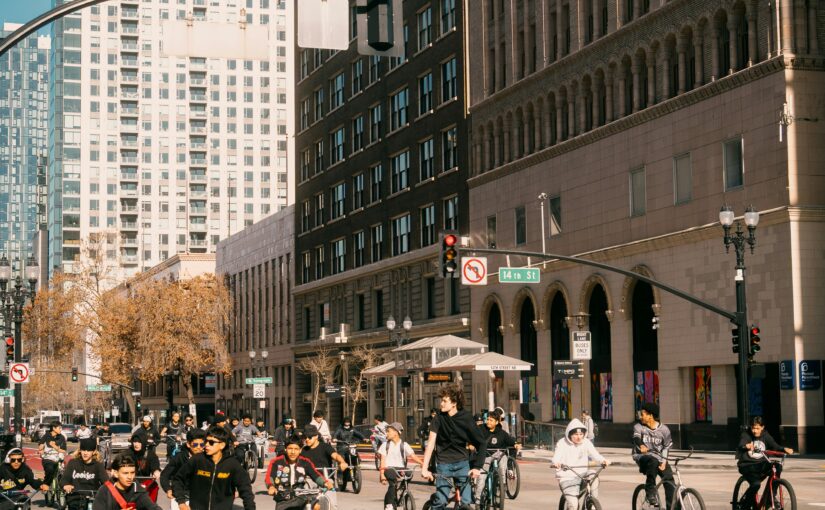
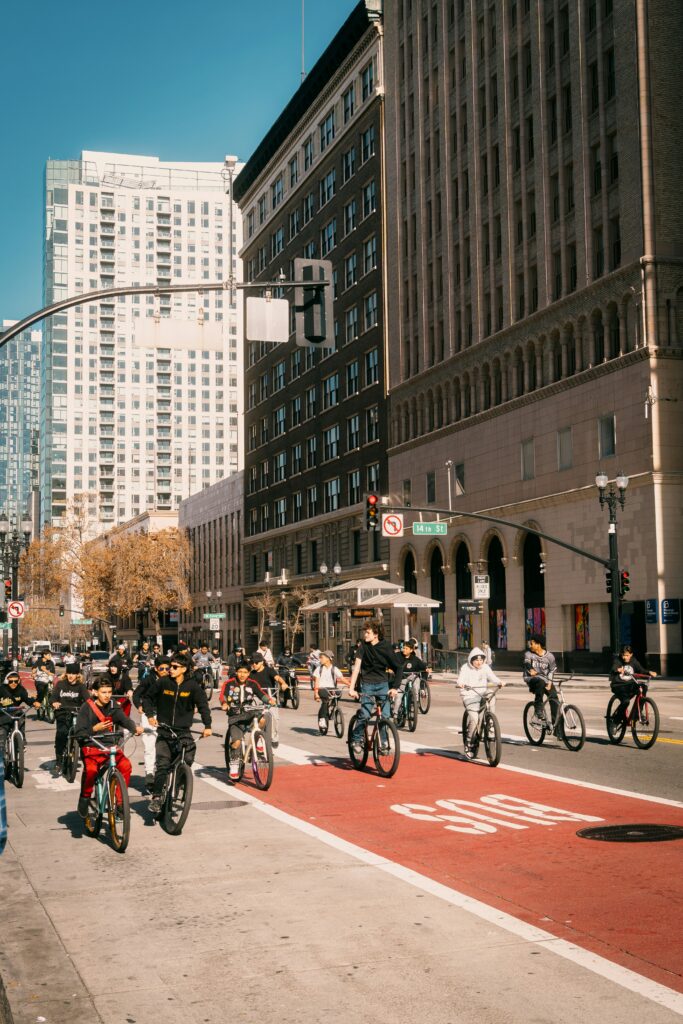
- Normalizing teens existing in public without suspicion
- Building walkable, accessible areas where connections can happen naturally
And here’s the kicker… letting teens have a little more freedom – even if its uncomfortable. Because growth is uncomfortable. That’s the whole point.
The Bottom Line
The suburbs aren’t “safe” if they’re quietly suffocating the people growing in them.
Teenagers do not need perfection and they don’t need to BE perfect. They do not need constant supervision or hyper-curated lives.
They need space, movement, community, and a little chaos.
They deserve a space to become themselves and right now, the suburbs aren’t giving them that.
We could continue to pretend everything is fine…
Or we can listen to our teens and build them something even better.